SOCSO vs SPIKPA for Malaysian Foreign Workers: What Each Covers
Most Malaysian employers who hire foreign workers know SOCSO is required. What few realize is that SOCSO alone does not pay for non-work hospital bills.
SOCSO (Social Security Organization / PERKESO) and SPIKPA (Foreign Worker Hospitalization and Surgical Scheme in English) are two separate, compulsory requirements for employers of foreign workers in Malaysia.
SOCSO covers work-related accidents under the Employees’ Social Security Act 1969 (Act 4). SPIKPA covers non-work illnesses requiring inpatient hospital treatment and is mandatory for Temporary Employment Pass renewal via FWCMS.
The two schemes never substitute for each other. A factory floor injury is covered by SOCSO, while a worker hospitalized for dengue fever falls under SPIKPA
An employer who assumes SOCSO provides full coverage is exposed to direct financial liability for every non-work hospital admission. When a hospital bill exceeds the policy’s annual limit, the outstanding balance falls entirely on the employer.
Key Takeaways
- SOCSO (PERKESO): Covers workplace accidents, commuting accidents, and occupational diseases. Approved claims have no fixed annual policy cap but are subject to PERKESO assessment.
- SPIKPA (FWHS/SKHPPA): Covers non-work illness hospitalization and surgery at Malaysian government hospitals, up to RM20,000 per policy year.
- General outpatient illness visits: Fever, flu, and other general illness consultations usually fall outside both schemes and should be managed through internal HR policy.
- Employer liability: Any foreign worker hospital bill exceeding the SPIKPA annual cap may become the employer’s responsibility under the employer’s Immigration undertaking.
The Core Difference Between SOCSO and SPIKPA in Malaysia
SOCSO and SPIKPA differ in one fundamental way: the origin of the medical event.
While SOCSO covers risks that arise from the job, SPIKPA covers risks that exist regardless of the job. An employer needs both because no worker’s risk is limited to the workplace.
What Is SOCSO (PERKESO)?
SOCSO (Social Security Organization / PERKESO) is a statutory social security fund under the Employees’ Social Security Act 1969 (Act 4).
It covers foreign workers for work-related accidents, commuting accidents, and occupational diseases. It is mandatory for all documented foreign workers in Malaysia.
SOCSO carries no strict annual financial ceiling for approved claims.
SOCSO operates through two primary schemes:
- Employment Injury Scheme: Covers medical treatment, income replacement, and physical rehabilitation for work-related accidents and occupational diseases.
- Invalidity Scheme: Provides protection for permanent, incurable conditions and non-work-related deaths.
As of 2026, PERKESO introduced the LINDUNG 24 Jam scheme. The scheme extends non-work accident protection to foreign workers outside working hours.
Contributions are split between the employer and employee. Rates are calculated as a percentage of the worker’s monthly salary, up to a wage ceiling of RM6,000 per month (effective October 2024).
For a full breakdown of SOCSO registration obligations, contribution categories, and payment deadlines for foreign workers in Malaysia, read: SOCSO for Foreign Workers in Malaysia: What SME Employers Must Do in 2026
What Is SPIKPA (FWHS)?
SPIKPA, or Foreign Worker Hospitalization and Surgical Scheme (FWHS), is a mandatory private commercial insurance scheme. It covers non-work-related illnesses and injuries requiring inpatient hospital treatment.
It is mandated by the Ministry of Health (MOH) and the Immigration Department. SPIKPA is required for annual Temporary Employment Pass renewal via the Foreign Worker Centralized Management System (FWCMS).
Foreign workers in Malaysia are generally not entitled to free public healthcare. When a foreign worker is admitted to a government hospital, the employer is liable for the bill.
As non-citizen rates at Malaysian government hospitals are significantly higher than rates for Malaysian nationals, SPIKPA exists precisely to cover this exposure.
SPIKPA covers daily hospital room and board (up to 30 days) and ICU care (up to 15 days per admission). Surgical fees, operating theatre charges, and anesthesia are also covered.
Coverage also includes specialist consultations, physician visits, ambulance services, and medical report fees. Treatment applies exclusively to Malaysian government (MOH) hospitals in 3rd-class wards. Private hospitals are not covered by this policy.
What SPIKPA does not cover:
- Emergency outpatient
treatment – the worker must be admitted as an inpatient - Death benefits
- Injuries from fights or illegal acts
- Total Permanent Disability (TPD)
Coverage for pre-existing conditions or chronic illnesses is limited or excluded depending on the insurer’s policy terms. Employers should review the Product Disclosure Sheet for the insurer selected.
The annual SPIKPA (FWHS) premium is RM120 per worker before SST. With 8% SST, the per-worker cost is RM129.60.
A RM10 stamp duty applies per policy batch, so the final amount depends on how many workers are renewed in the same session.
SPIKPA IG comprises two separate policies: FWHS (hospitalization and surgical coverage) and FWIG (insurance guarantee). For a full breakdown of how they differ and what each covers, read: FWIG vs FWHS: Types of Foreign Worker Insurance Explained
SOCSO vs SPIKPA: Side-by-Side Comparison
| Feature | SOCSO (PERKESO) | SPIKPA (FWHS) |
|---|---|---|
| Governing Law | Employees’ Social Security Act 1969 (Act 4) | MOH and Immigration Department mandate |
| Type | Statutory social security fund | Mandatory private hospitalization and surgical insurance |
| When Coverage Applies | Work-related accidents, commuting accidents, and occupational diseases | Non-work illness hospitalizations requiring inpatient treatment, subject to policy terms |
| Treatment Facilities | SOCSO panel clinics, government clinics/hospitals, and approved rehabilitation support | Malaysian government hospitals, generally based on third-class ward entitlement |
| Annual Financial Cap | No fixed annual policy cap, but benefits are subject to SOCSO assessment and approval | Up to RM20,000 per policy year |
| Annual Cost to Employer | Based on monthly contribution rates and wage ceiling set by SOCSO | RM129.60 per worker inclusive of 8% SST, plus RM10 stamp duty per policy batch |
| Mandatory For | Documented foreign workers covered under PERKESO requirements | Visit Pass – Temporary Employment (VPTE/PLKS) renewal |
The practical rule to remember:
- If the medical event is job-related, SOCSO/PERKESO applies.
- If it is a non-work accident, LINDUNG 24 Jam may apply.
- If it is a non-work illness hospitalization, SPIKPA applies, subject to the policy’s terms and annual limit.
Who Pays When a Foreign Worker Gets Sick or Injured in Malaysia?
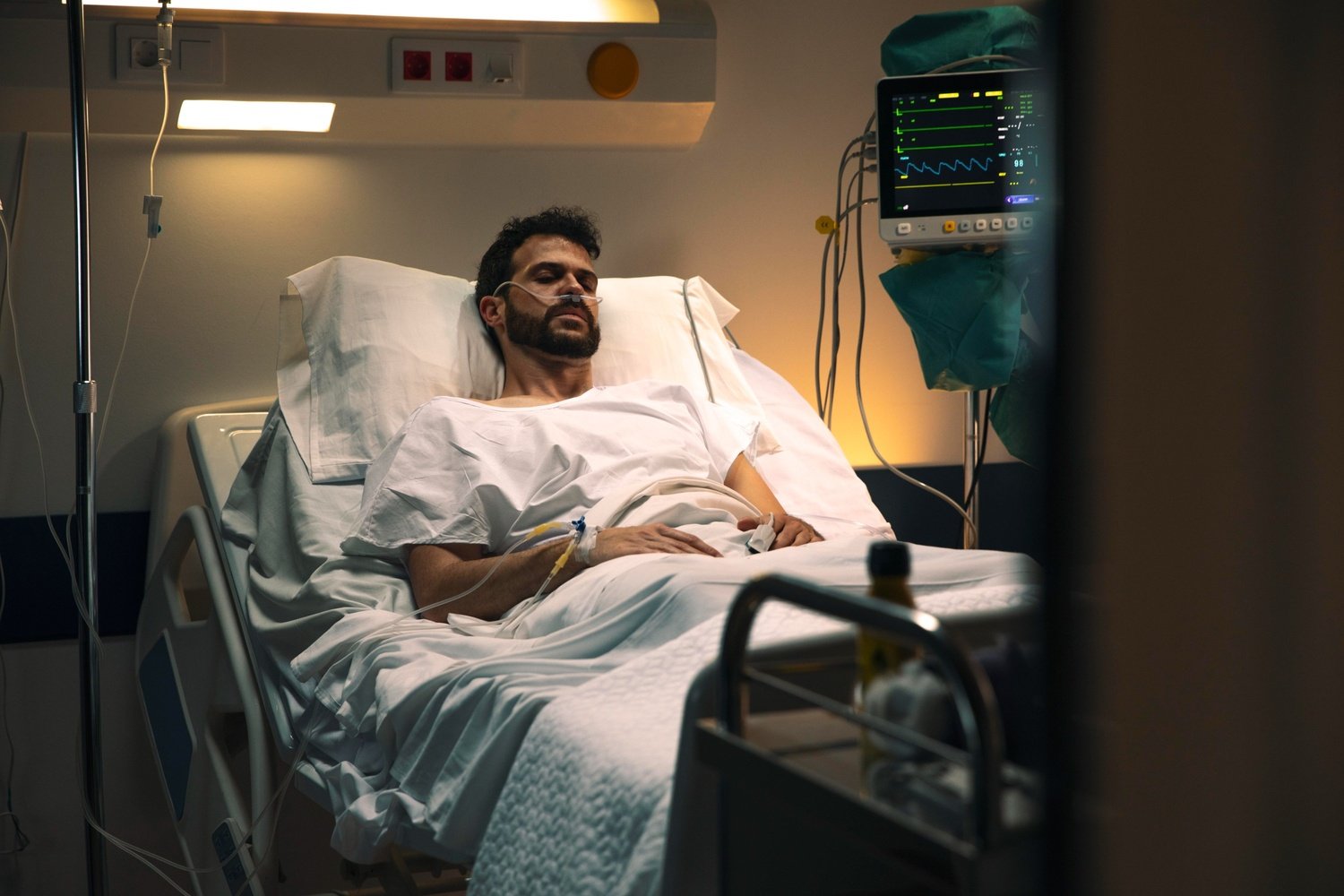
The answer depends on where the incident originated. Work-related events and occupational diseases fall under SOCSO. As for non-work accidents, they may now fall under LINDUNG 24 Jam.
Non-work illness hospitalizations remain covered by SPIKPA, up to the policy’s annual limit. General outpatient illness visits usually fall outside both schemes. The scenarios below show how each situation plays out.
Scenario 1: Worker Hospitalized for a Non-Work Illness (Acute Appendicitis)
A production floor worker develops severe abdominal pain at home. By morning, he is in a government hospital requiring emergency appendicitis surgery. He spends five days in the ward recovering.
Who covers this: SPIKPA covers this admission up to the policy’s annual limit.
Covered items include ward charges, surgical fees, anesthesia, operating theatre fees, and physician visits. SOCSO does not respond as appendicitis is a non-occupational illness.
Employer liability: If the total bill stays within the policy’s annual limit, SPIKPA covers it in full, subject to policy terms and insurer approval.
If the bill exceeds the limit, the employer is directly responsible for the outstanding balance. Malaysian government hospitals charge higher rates for non-citizens, so a surgical admission can quickly consume a large portion of the annual limit.
Not covered in this case: Follow-up outpatient visits after discharge are excluded. Post-hospitalization clinic costs fall on the employer or the worker depending on the employment contract.
Scenario 2: Worker Injured on the Factory Floor (Machine Accident)
A worker’s hand is caught in a manufacturing press during an active shift. He is taken to a government hospital for emergency surgery and requires four weeks of medical leave.
Who covers this: SOCSO’s Employment Injury Scheme covers this scenario in full. SOCSO pays for hospital treatment, temporary disablement benefits, and physical rehabilitation. SPIKPA does not apply to work-related injuries.
Employer liability: The employer must report the accident to SOCSO via the ASSIST Portal within the statutory timeframe. Late or missed reporting can result in penalties and may affect the worker’s claim. Once reported correctly, SOCSO manages the claim process directly.
Not covered in this case: The Employment Injury Scheme does not cover TPD long-term pensions under the same mechanism. Separate provisions apply under the Invalidity Scheme for permanent conditions. Employers in high-risk environments should review additional coverage with their insurance provider.
Scenario 3: Extended ICU Stay - Hospital Bill Exceeds the SPIKPA Limit
A worker is admitted with severe dengue hemorrhagic fever. His condition worsens, and he is moved to the ICU for 12 days. Total hospitalization spans 22 days, with a final bill of RM28,000.
Who covers this: SPIKPA covers costs up to the policy’s annual limit. Covered items include ward charges, ICU costs (up to 15 days per admission), and physician visits. SOCSO does not respond to this as dengue is a non-occupational illness.
Employer liability: The remaining RM8,000 above the policy limit is the employer’s direct financial responsibility. The employer must settle the outstanding balance before the worker can be discharged.
Where the financial burden falls: Non-citizen healthcare charges at Malaysian government hospitals have risen in recent years. A severe illness or extended ICU stay can push a single bill past the policy cap without being an extreme case.
Employers managing larger workforces need to account for this exposure. See the full FWHS coverage breakdown for a detailed look at what SPIKPA covers within the annual cap.
If your worker is currently admitted and SPIKPA applies, see the step-by-step process: How to Submit a Claim for Foreign Worker Insurance (SPIKPA IG)
Scenario 4: Outpatient Clinic Visit - Neither Scheme Applies
A worker visits a government clinic for a fever, medication, and a sick leave certificate. The visit does not result in hospital admission.
Who covers this: Neither SOCSO nor SPIKPA covers this. SPIKPA applies only to inpatient admissions, and SOCSO does not cover non-work-related clinic visits.
Employer liability: Consultation fees and medication costs fall outside both frameworks. Employers must absorb these as a welfare expense or address cost responsibility in the employment contract, as this is an internal HR policy matter.
What this means for employers: For employers managing 20 or more workers, outpatient costs accumulate across the year. Define who covers the cost of clinic visits in the employment contract before workers arrive.
Before Your Next Permit Renewal
For a step-by-step guide to purchasing SPIKPA IG via FWCMS, read: How to Purchase FWCMS Foreign Worker Insurance via eInsurans
Securing SPIKPA IG Compliance with eInsurans
Employer liability for foreign worker medical costs does not depend on which incident happens first. Both SOCSO and SPIKPA obligations apply from the moment the permit is active.
Understanding which scheme responds to which incident is part of the picture. Having a reliable way to renew SPIKPA before each permit cycle is the other.
Mandatory SPIKPA renewal is one of the most time-sensitive requirements in FWCMS. The right platform gets it done in minutes.
Why Employers Choose eInsurans
- Instant FWCMS integration via direct API, so permit applications move forward without manual follow-up
- 99.9% uptime on Financial Link’s trusted infrastructure – a stable alternative when other systems experience downtime
- FPX B2B payment support for corporations running Maker-Checker banking workflows
- Real insurance specialists handling both insurance queries and FWCMS troubleshooting
Stay compliant at every permit renewal cycle and purchase your SPIKPA IG bundle with eInsurans today.
Trusted Foreign Worker Insurance Solutions
Digital SPIKPA IG insurance with seamless FWCMS integration, secure payments, and real human support.